Sydney Streamlines
It's New Years 2067, and Axel needs to get from his house to the Sydney Harbour Bridge. The city can be modelled as a collection of interchanges, numbered from
to
. These interchanges are joined by various types of public transport, and there are
connections in total.
Axel's house is at interchange , and he wants to get to the Harbour Bridge at interchange
by travelling along the connections. He doesn't want to visit the same interchange more than once, and only wants to use a single form of public transport for the whole trip (i.e. only taking the
Train).
How many ways can he get from interchange to interchange
, using each type of transport available?
Input
The first line contains two integers and
(
,
), the number of interchanges in Sydney, and the number of connections between them.
The next lines contain two integers
and
and an uppercase string
, indicating that Axel can travel from interchange
to
using the public transport
. There are at most
unique transport types. These lines are guaranteed to be unique.
Output
Output the number of ways to travel from interchange to interchange
using only one type of public transport, listed in alphabetical order by transport type.
Example
Input 1
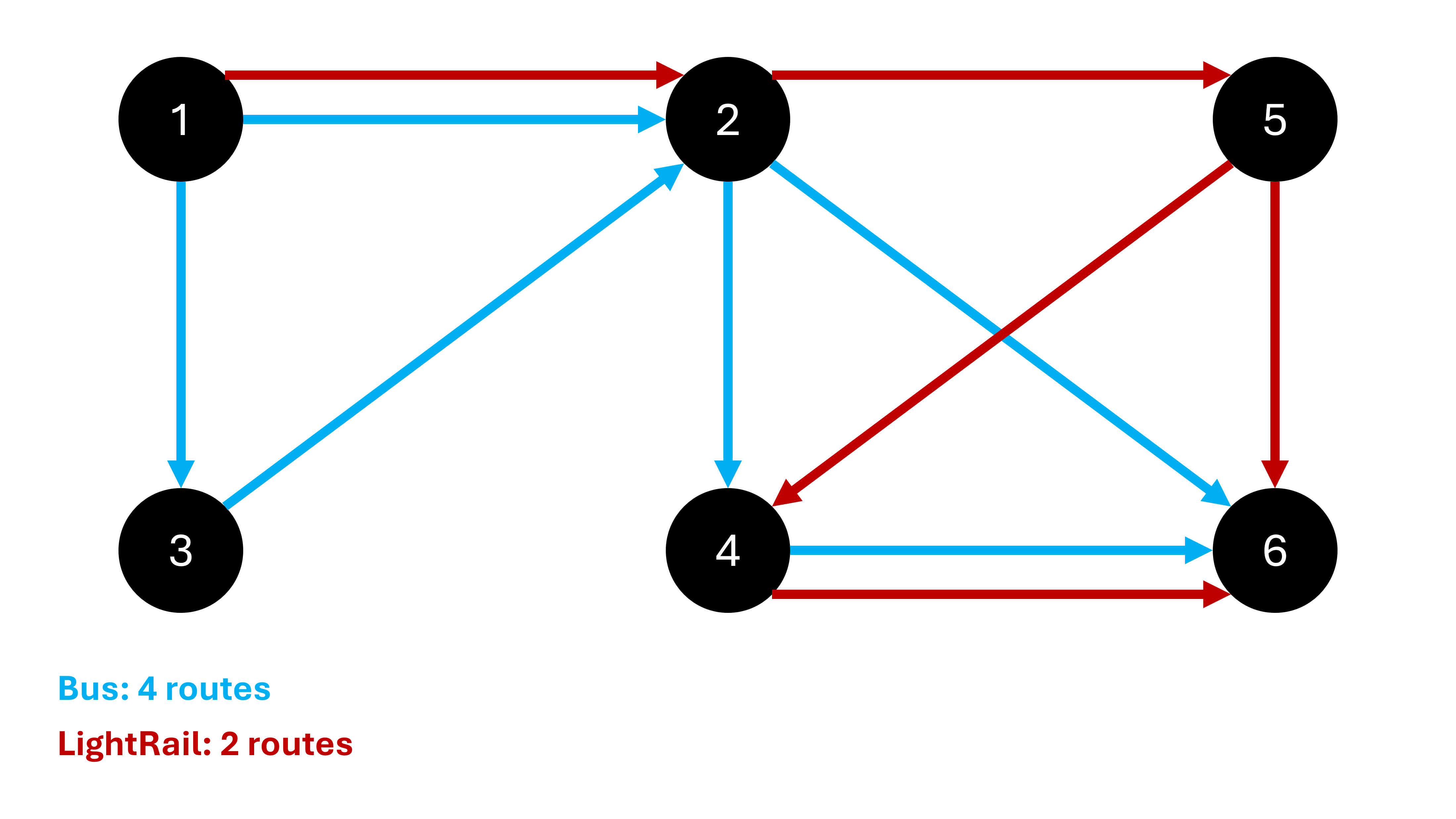
6 11
1 2 BUS
1 2 LIGHTRAIL
1 3 BUS
3 2 BUS
2 4 BUS
2 5 LIGHTRAIL
2 6 BUS
5 4 LIGHTRAIL
5 6 LIGHTRAIL
4 6 BUS
4 6 LIGHTRAIL
Output 1
BUS 4
LIGHTRAIL 2
There are ways to get from interchange
to
via bus:
1 -> 2 -> 61 -> 2 -> 4 -> 61 -> 3 -> 2 -> 61 -> 3 -> 2 -> 4 -> 6
There are ways to get from interchange
to
via lightrail:
1 -> 5 -> 61 -> 5 -> 4 -> 6
Input 2
4 12
1 2 TRAIN
2 4 TRAIN
1 3 TRAIN
3 4 TRAIN
1 2 FERRY
2 4 FERRY
1 3 FERRY
3 4 FERRY
1 4 FERRY
2 3 FERRY
3 2 FERRY
4 1 FERRY
Output 2
FERRY 5
TRAIN 2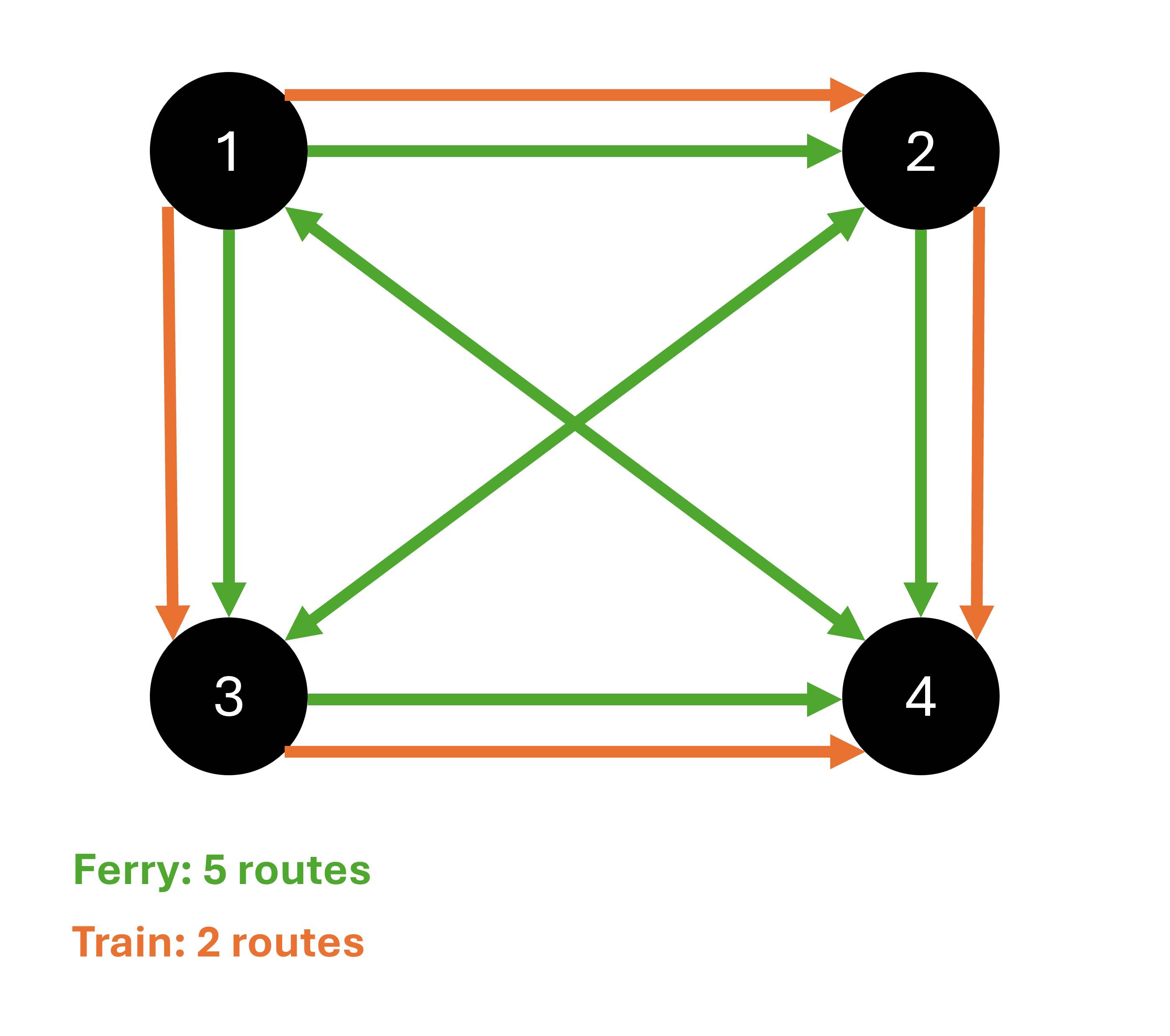
Input 3
3 2
1 2 METRO
2 3 WALK
Output 3
METRO 0
WALK 0
Comments